

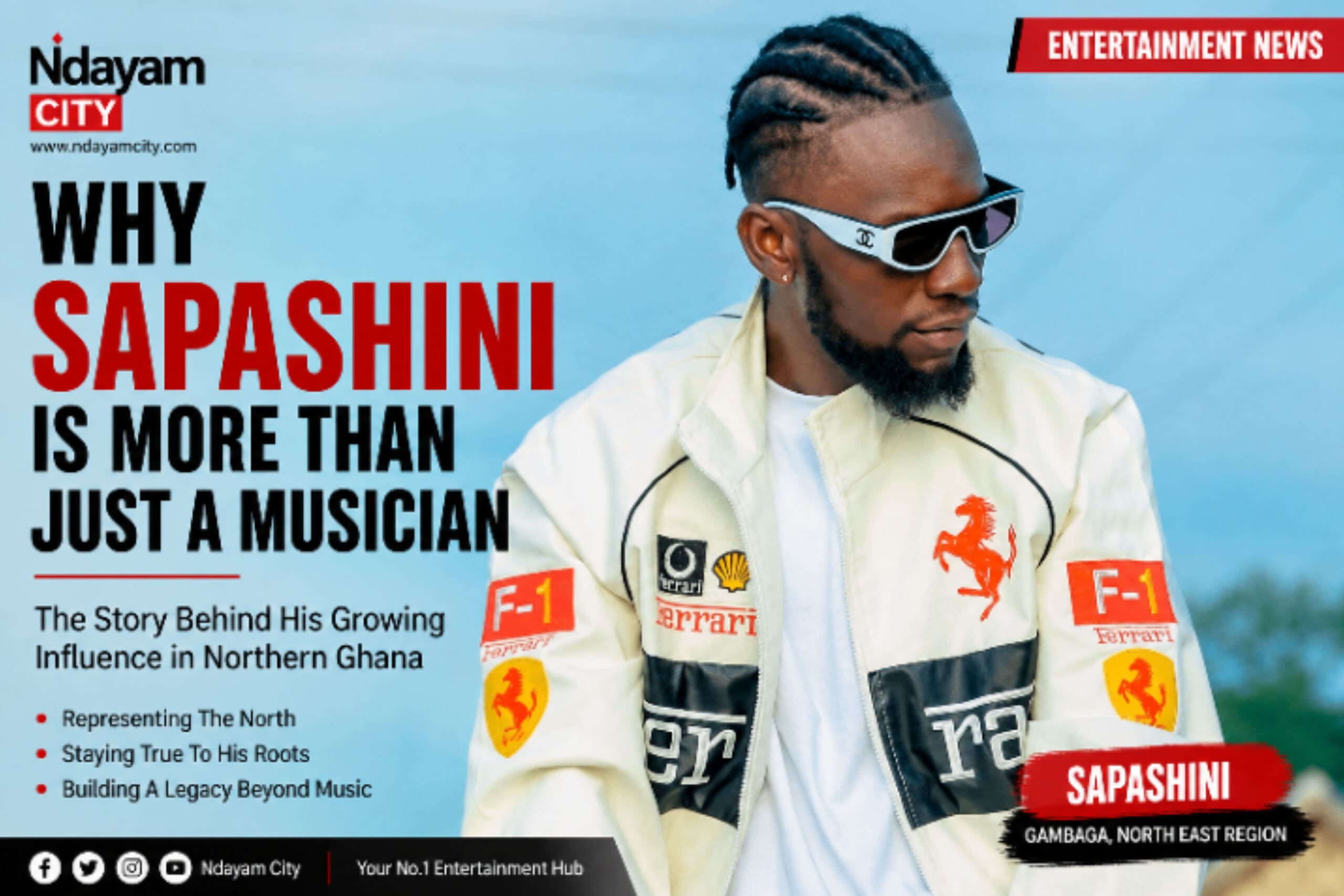
Why Sapashini Is More Than Just a Musician — The Story Behind His Influence in Northern Ghana
When conversations about musicians shaping the entertainment scene in Northern Ghana come up, Sapashini is a name that cannot easily be left out.
The Ghanaian musician has built a reputation that goes beyond releasing songs and performing on stage. From his roots in Gambaga in the North East Region to his growing presence in Ghana’s wider music industry, Sapashini has consistently carried a strong sense of identity into his music.
His sound combines elements of Afro-Pop, Afrobeat and other contemporary styles while maintaining connections to Northern Ghanaian culture and languages. That combination has helped him establish an identity that is recognisable to fans within the region while also allowing his music to reach listeners beyond Northern Ghana.
For many fans, that cultural connection is one of the things that makes Sapashini different.
At a time when Ghana’s mainstream entertainment conversation can often be dominated by Accra and Kumasi, Northern musicians have had to work hard to make their voices heard nationally. The growth of Northern Ghana’s entertainment industry in recent years has shown that the region has both the talent and audience to command attention.
Sapashini has been part of that movement.
His catalogue includes songs such as “Bana,” “Hard Truth,” “Ibaadah” and “Mampruh Poah,” while he has also appeared on records with other artists, including Don Ziggy’s “Zaaninya.” His latest release listed on Apple Music is “Nbaa Ngbai,” released on April 24, 2026.
His continued involvement in collaborations is also important because it shows that his relevance has not been limited to his own records. Sapashini remains connected to the wider Northern Ghana music ecosystem, working alongside artists from different backgrounds and generations.
His name has also featured prominently in conversations about the rise of North East Ghana’s entertainment scene. At the 2025 Ghana Northern Music Awards, Sapashini represented the North East Region among the notable regional performers, while the event itself highlighted the growing depth of talent across Ghana’s five northern regions.
And the numbers show that his music continues to have an audience. A June 2026 Northern Ghana streaming chart placed Sapashini among the region’s most-streamed artists on Boomplay, with more than 575,000 streams at the time of the ranking.
But perhaps the biggest part of Sapashini’s story is not simply how many songs he has released or how many streams he has accumulated.
It is what his presence represents.
For young musicians from Northern Ghana, seeing artists maintain their cultural identity while pursuing a career in contemporary Ghanaian music can be powerful. Sapashini’s career is an example of how an artist can remain connected to his roots without allowing those roots to limit the direction of his music.
That is particularly significant as Northern Ghana’s entertainment industry continues to expand. In 2026, major concerts and growing audiences have further demonstrated the commercial strength of the region’s creative industry, with artists such as Sapashini appearing alongside established and emerging acts at major events.
There is also a wider conversation about the amount of national attention Northern musicians receive. Media personality Sammy Rasta recently argued that musicians from Northern Ghana deserve more coverage from mainstream Ghanaian media, pointing to the growing size of audiences and major events in the region.
That conversation makes artists like Sapashini even more important.
He is not simply another name on a Northern Ghana music playlist. His career forms part of a larger story about cultural representation, regional pride and the determination of Northern musicians to compete on a much bigger stage.
As Sapashini continues to release music and collaborate with other artists, his next chapter could be just as interesting as the journey that brought him here.
For an artist whose identity has always been closely connected to where he comes from, the bigger achievement may ultimately be showing that where you come from does not have to determine how far your music can travel.